


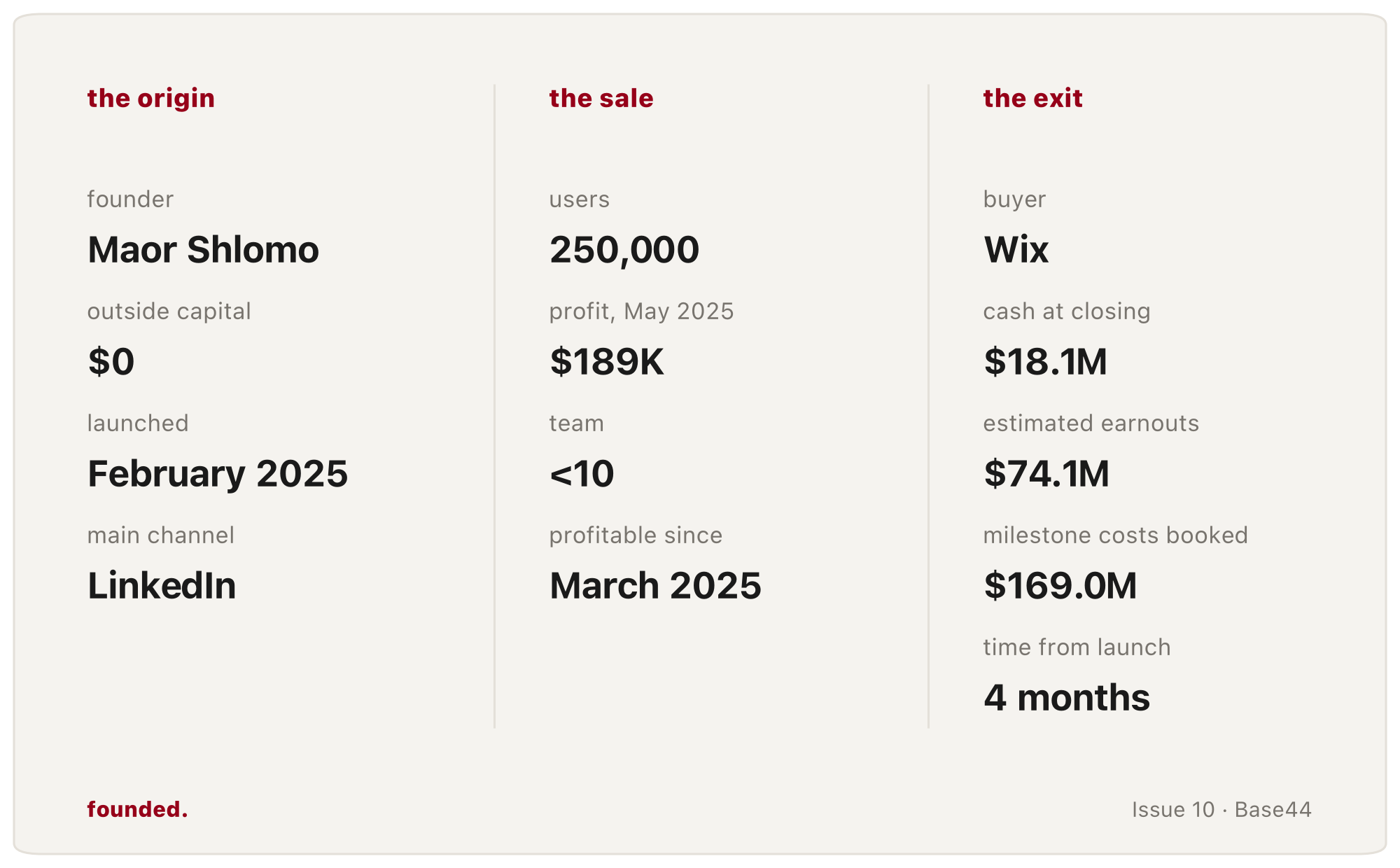
TLDR: In 2017, Maor Shlomo co-founded Explorium, a data analytics company backed by Insight Partners, and served as CEO for seven years. In late 2024, after a year of reserve duty, he stepped down to get back to building products. It wasn’t long before he tried to build a website for his partner’s tattoo business in WordPress and ran into trouble, even as the former CEO of a tech company. That frustration became Base44, an app builder that writes code from plain language. He built it with almost no staff, marketed it on LinkedIn and turned down every investor. Once it gained some traction, it went from $0 to $1 million in annual recurring revenue (ARR) in three weeks. In June 2025, four months after launch, Wix bought it for an announced initial consideration of about $80 million, though only $18.1 million was paid in cash at closing. Calcalist reports that earnouts have since put him on course to receive more than $150 million. The following is a complete breakdown of how Base44 went from first build to exit in about six months.
What we found out:
One marketing channel is all you need.
Build the first version with your customers.
Track paying customers, not sign-ups.
Profitability gives you the option to say no.
Sell when the next stage of growth can’t be sustained without investment.
Choose an offer with an earnout only if you would bet on the growth yourself.
01: a tech CEO who couldn’t build a website
Maor Shlomo grew up in Haifa, in northern Israel. Both of his parents worked in technology; his mother worked on X-ray and MRI systems at Philips.
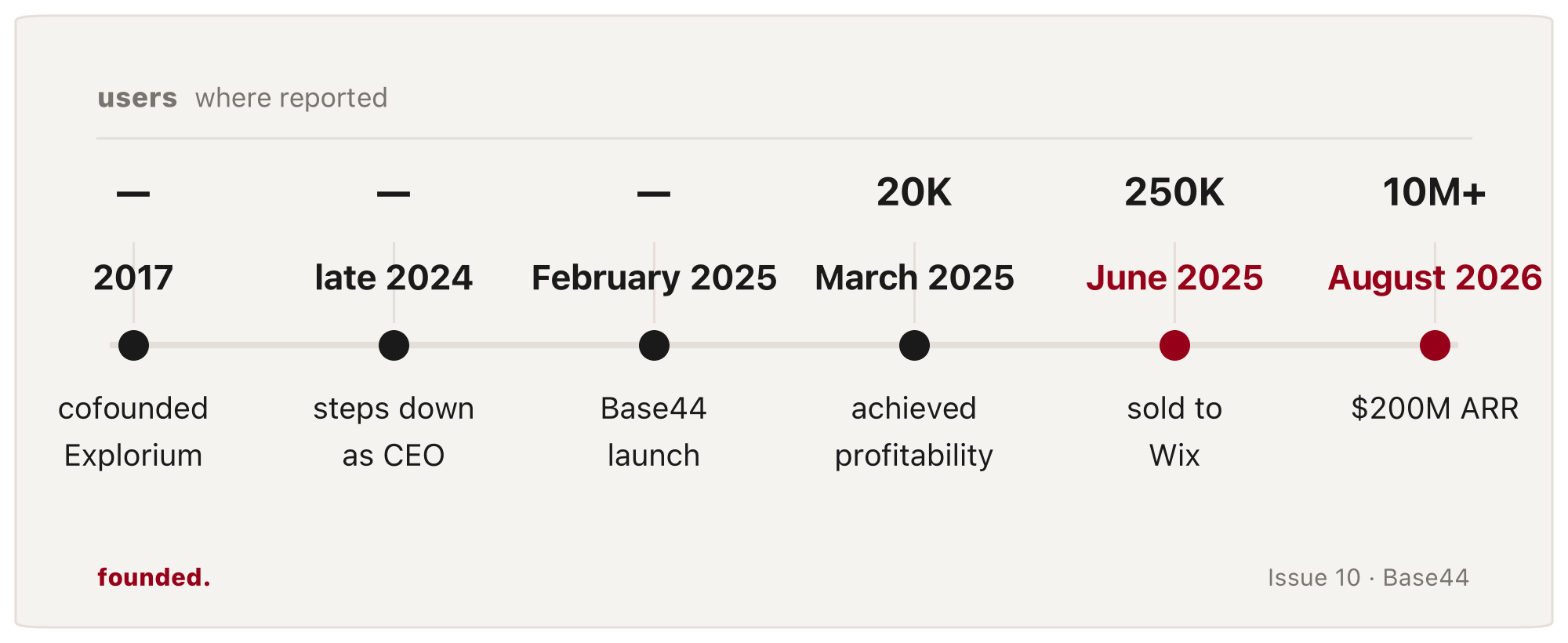
In 2017, he co-founded the data analytics company Explorium with two partners. It raised venture capital from Insight Partners among others, and Maor served as CEO for seven years.
Most of the write-ups I read call Base44 a six-month story. The seven years at Explorium are why it could move that fast. He already knew that raising money wasn’t what he wanted, so turning it down was an informed choice. The launch of Base44 was also supercharged because Maor already had a following on LinkedIn, where he built the product publicly.
back to product
After a year of reserve duty in 2024, Maor stepped down as CEO of Explorium but stayed on as a shareholder and board member. He explained the decision:
I wanted to get back to touching the product... At my core, I’m a product person. Being CEO pulled me away from what I love most.
— Maor Shlomo
Josh Pigford said something similar about Baremetrics, the fourth case study I ever wrote. He was a designer by trade who said he was not a particularly good manager, which was partly why profitability suffered. The difference is that Maor knew this about himself before he started, so Base44 was built in a way so that he could work closely with the product rather than managing people and operations. Josh learned that the hard way.
the tattoo website
Maor and his life partner, Yuval Dahan, then spent two months in Thailand and the Philippines:
Yuval and I wanted to experience a bit of digital nomadism... Koh Pha Ngan is a fun place to sit and work.
— Maor Shlomo
Yuval is a tattoo artist and needed a website and a customer management system for her business. Maor tried to build both for her in WordPress and kept getting stuck:
I kept racking my brain, I was the CEO of a tech company, and yet it was so difficult.
— Maor Shlomo
He told another interviewer there was a second use case: he was helping the Scouts in Israel with their software. On LinkedIn, he described the situation as (the Scouts) being a large nonprofit with tens of thousands of members and no in-house developers, where every agency quoted more than $1 million to build the basics. It turns out the tattoo website wasn’t the only inspiration. Maor wrote that Base44 was an idea he had obsessed over for years, and that every MVP he built had failed. Large language models finally made it possible; the two separate use-cases made it clear that he had to double down. If he thought it was confusing as a former CEO of a tech company, other business owners would too.
At its core, Base44 lets a user describe an app idea in plain language and builds all of the infrastructure: the front end, the back end, the database, user logins and hosting. Users could already try their hand at vibe coding with other AI tools, but still had to deal with setting up the different parts themselves. Wix’s annual report later described it as a way to build software “without the need for manual coding, a method known as ‘vibe-coding.’” Maor described the goal more simply:
Base44 is a moonshot experiment — helping everyone, technical or not, build software without coding at all.
— Maor Shlomo
02: from three friends to $1 million
the first users
Maor started building Base44 with a surprisingly small goal. He told Lenny’s Podcast:
The funny thing is that Base 44 for the first time in my life was not trying to build the biggest thing ever.
— Maor Shlomo
The first users were three close friends: solo founders that weren’t technical, all trying to build their businesses quickly. He sat them down every other day, watched them use the interface and fixed issues on the spot. That got the first 10 users. On LinkedIn, he called it “the cheat code”:
You need 3-5 people who will gladly live inside your broken, unfinished, embarrassing v1.
— Maor Shlomo, on LinkedIn, March 5, 2025
As it grew, he widened the circle to 20 community members at a time, repeating it every two weeks:
In the early days, I’d bring in 20 community users every two weeks to build things together. A jeweler, a psychologist, a coach, a lawyer, even a doctor from Ichilov...
— Maor Shlomo
None of them coded for a living. They were the customers Base44 was built for and helped shape the entire experience.
failed launches
Base44 launched in February 2025 according to Inc. The first attempts at a launch had little success. On Product Hunt, he managed to get around 15 users. He tried influencer marketing and paid ads next:
Influencer marketing didn’t work. Paid ads didn’t work. I spent a few thousand dollars with no real return.
— Maor Shlomo
As many founders do, he handled sales, building the product and customer support himself. In the early days, he woke up every two to three hours through the night to check that nothing had crashed.
If you’re interested in getting a weekly deep-dive to adopt founder mindsets, skills, and lessons please subscribe. It’s great to have you in the family!
the post that worked
The turn came in early March 2025. On March 5, he posted on LinkedIn that Base44 had crossed 20,000 users (total sign-ups, not paying users) and was profitable. The next day, after a post on X took off, he wrote:
Wow this post blew up. Added 5k users and 1/3 of Base44’s revenue in 24 hours. Will be posting more on the journey, next up - failed launches and going from 1 to 50 users. But for now - back to doing support.
— Maor Shlomo, on X, March 6, 2025
A third of the company’s revenue was created in a single day, and the founder’s main priority was dealing with support tickets. Ten days later, he posted that Base44 had added more than $100,000 of ARR, with communities growing in Germany, other parts of Europe, Brazil and Israel. Most people building with AI still hadn’t heard of it.
His LinkedIn posts from those weeks show what that growth looked like from the inside. On March 10, he wrote that there was now “a new paying customer every few minutes,” that the platform had been “slow as hell” and that he had upgraded the servers twice in one day. Two days later: “My inbox is R.I.P, apologies for not being able to get back to people.” And on March 16, after the $100,000 day, he admitted distribution was “not one of my strengths”: he had spent $5,000 on marketing that month, and it “yielded basically nothing.”
He had set himself a target of $1.5 million ARR by the end of 2025:
If we get to $1.5 million until the end of 2025, we’re going to buy a nice car. And we got there in like four weeks.
— Maor Shlomo, on Lenny’s Podcast
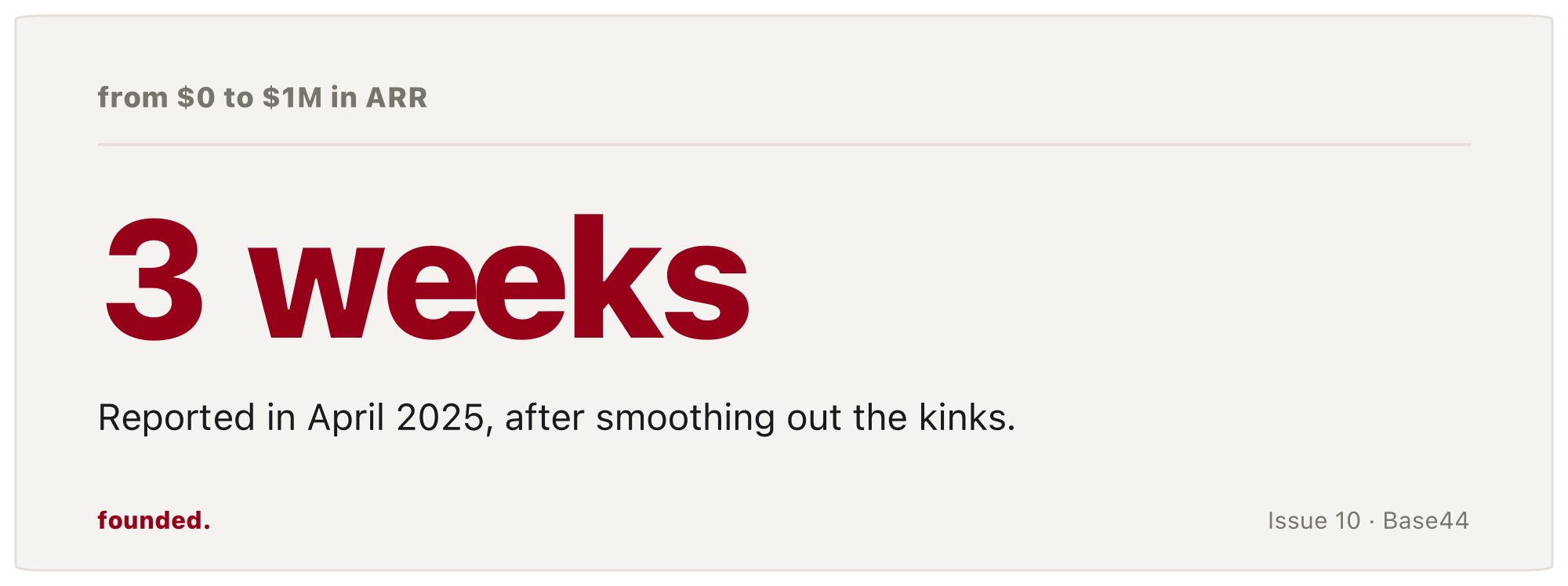
In April 2025, he summed up the run in a long thread on X:
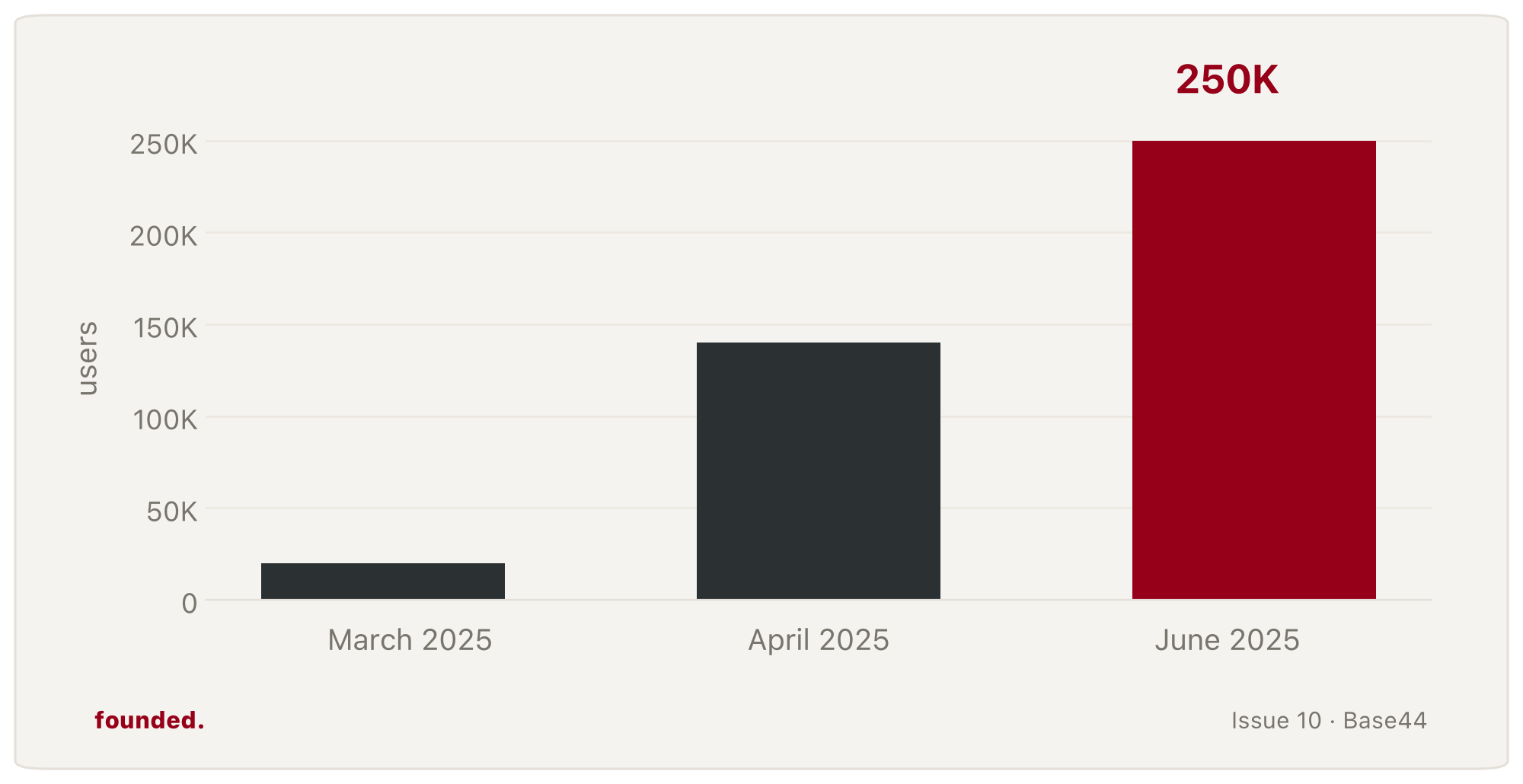
Once things started clicking - it took 3 weeks to go from $0 to $1M ARR, and 7 weeks to cross 140k users. But before that, I failed miserably at marketing.
— Maor Shlomo, on X
By mid-April, Base44 had 140,000 users, and at the time of the sale, TechCrunch reported 250,000. Other outlets reported 350,000 and more than 400,000; I’ve used TechCrunch’s figure because it was published on the day of the sale. Either way, Base44 went from 20,000 total users (free + paid) to at least 250,000 in about three months.
one channel
In the same thread, he explained the choice that turned it around:
After trying a bunch of things, I picked LinkedIn—mainly because I already had some reach there.
— Maor Shlomo, on X
He also said that other AI products were stronger on X, so LinkedIn was the channel where he had an audience and less competition. He shared every step of the build there: the problems and the wins. Maor found success working with a handful of smaller creators instead of big influencers:
Start by engaging 3–5 smaller creators. Work with them on feedback. Iterate until they LOVE your product, and consistently create quality content about it.
— Maor Shlomo, on X
TechCrunch reported that Base44 spread mostly by word of mouth as he posted about the build, and that he signed partnerships with Israeli tech companies, including eToro and Similarweb. He also demoed it live at an AWS event in Tel Aviv. At the time of the acquisition, about half of Base44’s users were in the United States and about a quarter were in Israel.
paying users
The same thread also named the key metric he watched:
Don’t focus on growing your user base. Focus on growing paying users. Once I shifted to that, everything else grew too.
— Maor Shlomo, on X
A free user costs an AI product money every time the service is used because each request runs through a large language model (LLM) that costs the company tokens. A paying user covers that cost and has a reason to tell others. Subscriptions ran from $20 to $200 per month with a free plan that is still offered today. There is also an annual billing option which is 20% cheaper.
Base44 sold mainly to individuals and small businesses, where churn is high. Maor’s answer was to make the first session impressive enough that people came back when they had something else to build. The results spoke for themselves:
At Base44, over a third of churned subscribers return within a month.
— Maor Shlomo, on X
03: no outside money
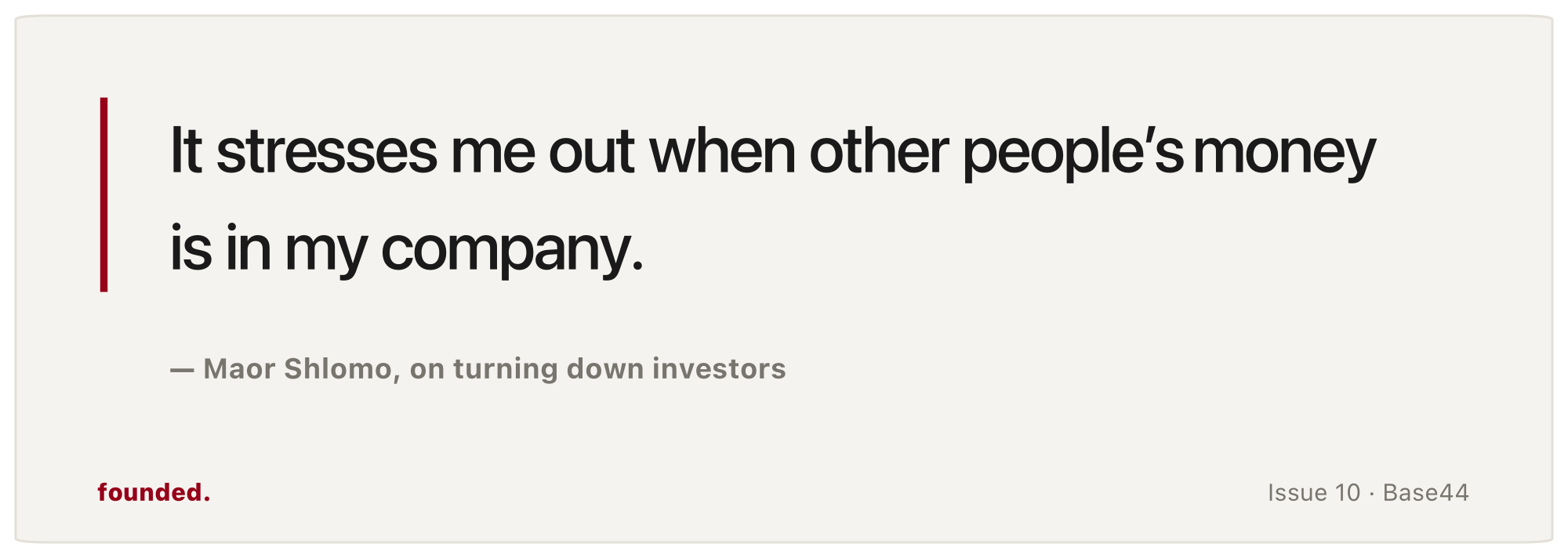
A product growing as fast as Base44 in the middle of an AI boom attracts investors. Maor said almost every fund in Israel approached him, including the investor Oren Zeev, and he turned them all down. He had run Explorium on outside capital and didn’t want to do it again:
He could refuse funding because Base44 had paid for itself since early March 2025. In early June, he posted profit numbers:
Base44 ended up making $189K profit in May, not $100K as expected.
— Maor Shlomo, June 4, 2025
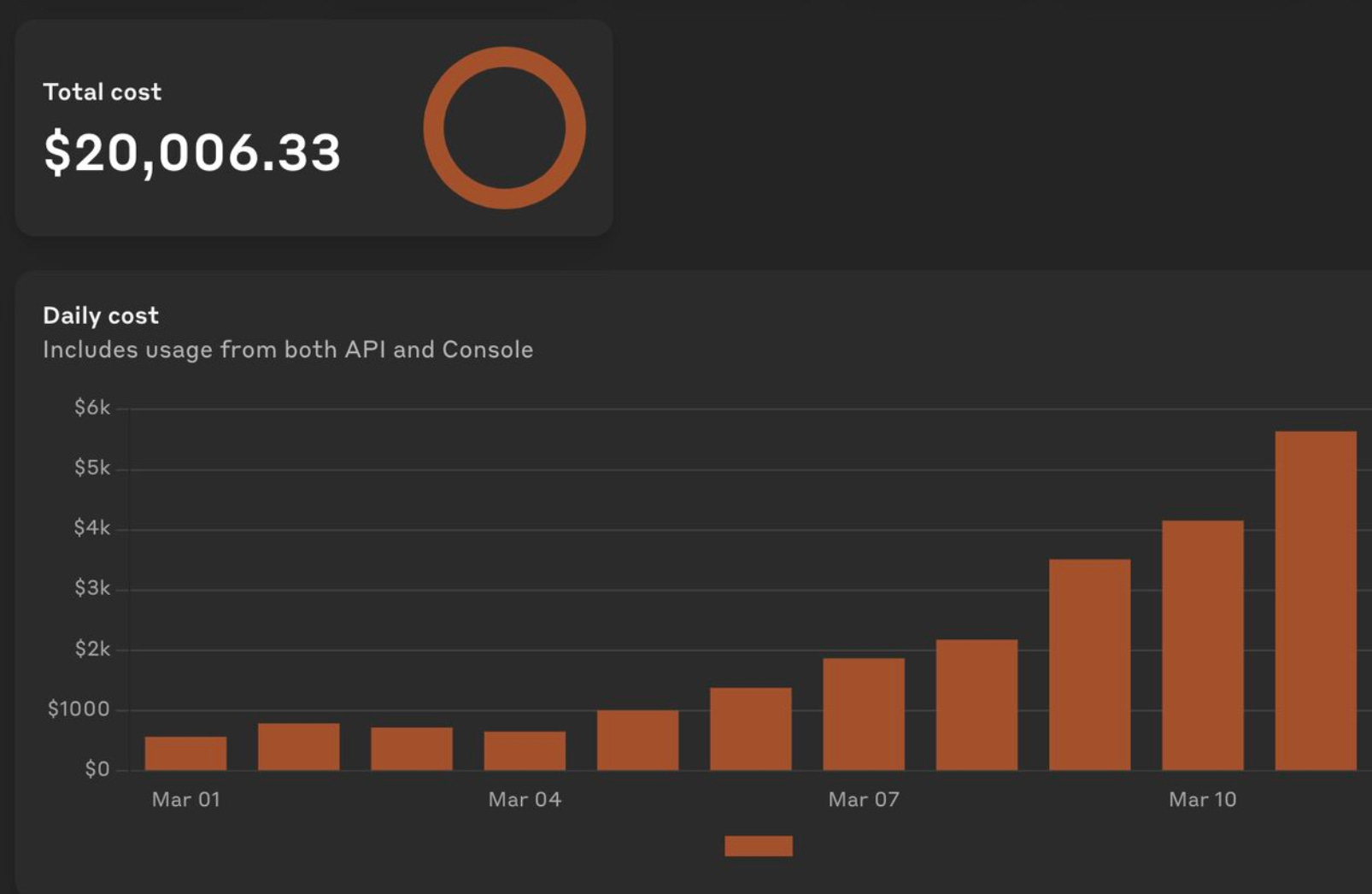
There were two primary reasons: Growth had been faster than he anticipated and his LLM costs had dropped significantly. The main driver, he wrote, was switching to Anthropic’s Claude 4 model, which had fewer bugs and required fewer calls to build each app. That matters because Base44 doesn’t charge users credits when an app bug was fixed so each one was an additional cost. He also found a caching setting that had been set to five minutes instead of an hour, a mistake he estimated had cost Base44 $20,000-$30,000.
building alone
On March 9 Maor posted a long, valuable thread with lessons learned as a solo builder, contrasting it with running a venture-backed company with several engineering teams. Three stuck with me as quite unique: He pushed code to the live product 13x per day, with each one taking seven minutes, and accepted that stability was “definitely not perfect.” He skipped big opportunities on purpose; he knew there was significant demand for building games on Base44, but didn’t optimize for it. Finally, he deleted features almost as fast as he built them because the more users Base44 had, the clearer it became which ones were actually used.
For the first couple of months do not meet any person that is not a potential user who might turn eventually to a paid user.
— Maor Shlomo, on LinkedIn, March 9, 2025
growth beyond LinkedIn
Base44 ran Base4Good in April, a 24-hour global hackathon for apps that make a positive impact, with monday.com and Google Cloud as partners. Maor posted that more than 10,000 companies were using Base44; 1,300 of them were paying customers. The coolest part? He ran all of Base44’s operations on apps built by the service itself. On May 28, he demoed it from the AWS Summit keynote stage in front of 7,000 people and by early June an affiliate program was added that paid affiliates 20% of a new customer’s subscription for their first six months. 280 affiliates joined in the first two weeks. The one channel that still didn’t work was paid ads: he wrote that his Meta ads were “still small numbers since ROI isn’t there yet.”
the first hire
His first hire was a technical product specialist who could “do a bit of everything—logs, scripts, analytics,” and Maor put him in charge of growth. That was the only hire made more than 30 days before the sale. When Base44 was sold, the team was still under 10 people, and Calcalist reported that five of them had joined in the month prior to the sale.
steaks at the CEO’s house
Base44 caught the attention of Avishai Abrahami, Wix’s co-founder and CEO. In May 2025, he and Maor met three times at Abrahami’s home to talk about the future of Base44. Nir Zohar, Wix’s president, had given Maor one piece of advice before the first meeting:
Nir Zohar, Wix’s president, told me I should have some steaks at Avishai’s house.
— Maor Shlomo, to Inc.
why sell?
Six months after he started building, he had a profitable company and no need to sell. He said so himself:
The product was profitable. I didn’t have to sell. But partnering with Wix gave me a chance to scale faster and maybe lead the category.
— Maor Shlomo
His LinkedIn post on the sale, quoted by TechCrunch, gave the same reason in fewer words: “the scale and volume we need is not something we can organically grow into.” Having turned down investors, he had no interest in raising outside capital to get there, and Wix already had the reach. In his own post, he wrote that the decision came “after a few sleepless nights chatting with Avishai,” and that Wix shared Base44’s product category, vision and many users. In Wix’s announcement, he said:
I honestly can’t think of a better fit. Wix is probably the only company that can help Base44 achieve the scale and distribution it needs while maintaining, if not accelerating, our product velocity.
— Maor Shlomo
When I first read about the six-month idea-to-exit timeframe, I assumed the founder was cashing out early. The structure of the deal changed my mind: most of the price depended on how Base44 grew after the sale.
04: the compounding exit
the deal
Wix announced the acquisition of Base44 on June 18, 2025, with Maor as the only shareholder. The announcement described an initial consideration of about $80 million, including about $25 million in retention bonuses for Base44’s employees, plus earnout payments through 2029 tied to performance metrics, which Calcalist reported as revenue targets.
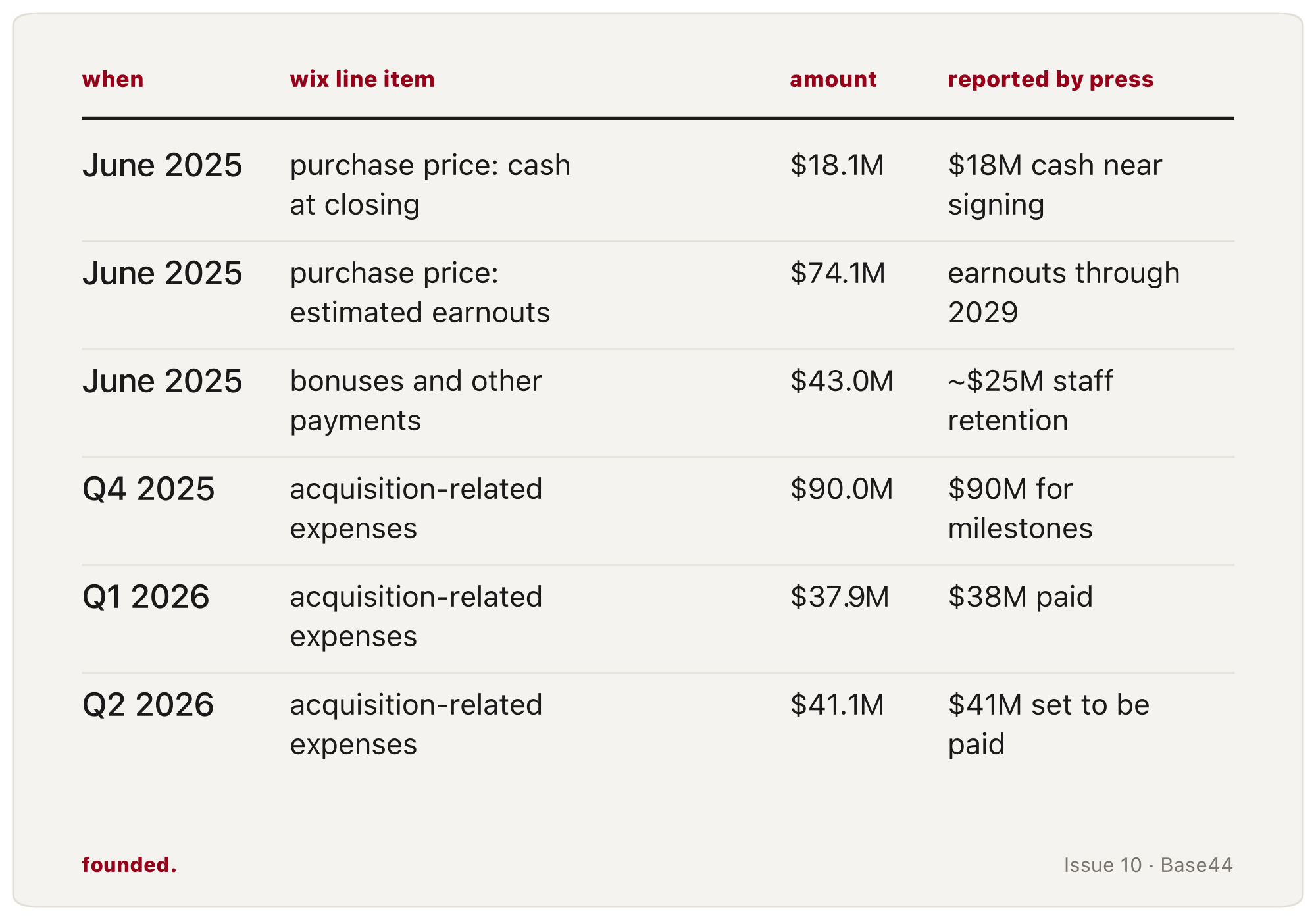
Wix’s annual report for 2025 provided the accounting breakdown that explains where the $80 million went. Wix valued the purchase at $92.2 million: $18.1 million paid in cash at closing and $74.1 million as its estimate of the earnouts it expected to pay by 2029. The employees’ money was excluded from the purchase price, as $43.0 million in bonuses and $8.0 million of equity vested over four years. Early coverage called the deal $80 million all cash. Wix’s own reports show that only about 1/5 of the purchase price was cash at closing; the rest depended on Base44 hitting revenue targets.
On Calcalist’s revenue figure of $200,000 a month, or about $2.4 million a year, the cash at closing was about 7.5x annual revenue and the full purchase price, including Wix’s estimate of the earnouts valued the business at approximately 38x revenue. Maor’s reported $189,000 profit figure means revenue must have been higher than Calcalist’s figure, so the real multiples are likely lower.
the earnout
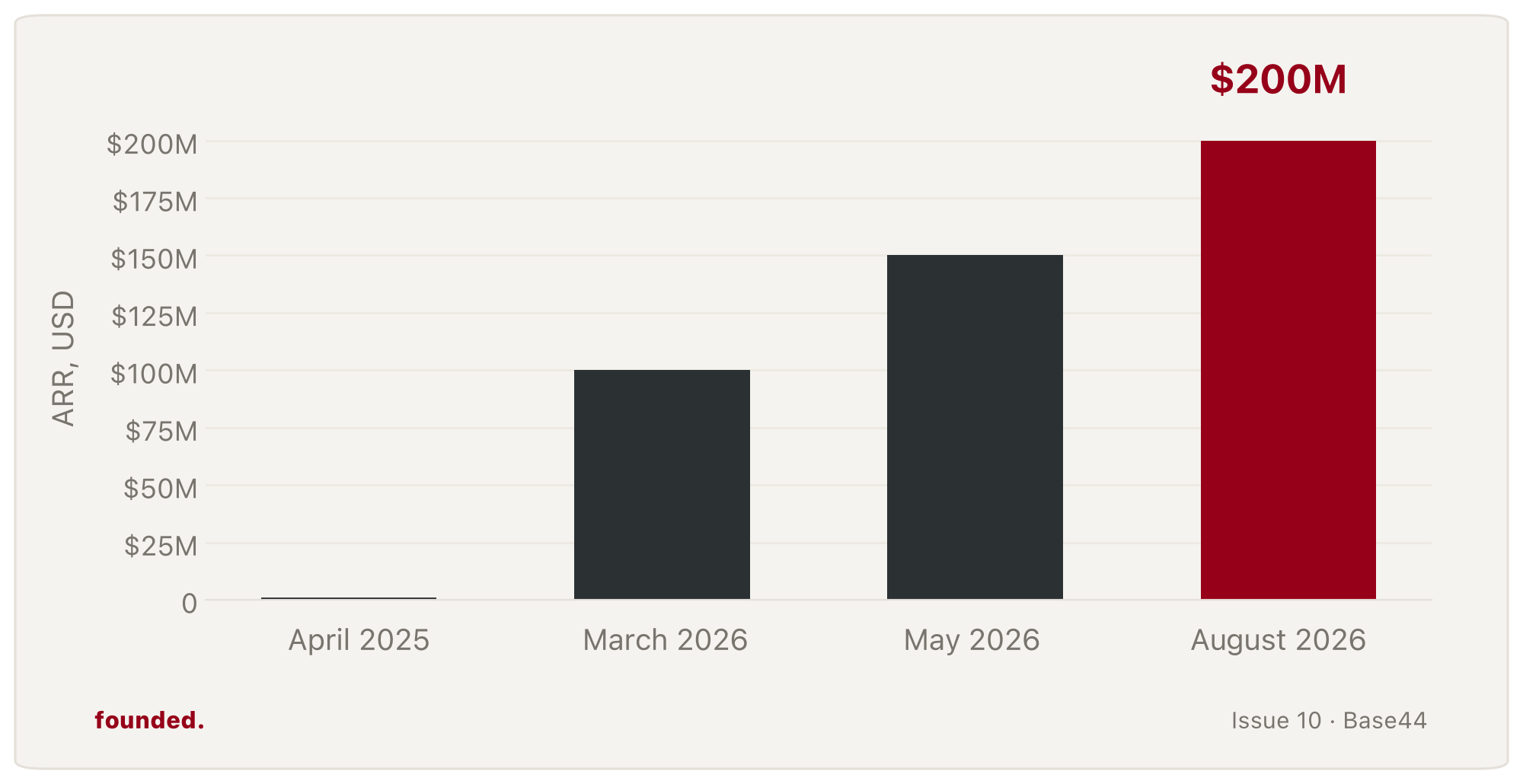
Wix expected Base44 to reach $40-$50 million ARR by the end of 2025. It passed $100 million in March 2026 and reached about $150 million in May 2026. When a business overshoots targets the earnouts inflate as well and the buyer accounts for the extra cost as an expense. I went looking for the exact earnout payments and found that Wix doesn’t report as such. Instead, it reports acquisition-related expenses each quarter, which was then assigned as a payment to Maor by the press.
Wix reported $90.0 million of acquisition-related expenses in Q4 2025, reported as an additional $90 million Maor was on track to receive. The Q1 2026 figure was $37.9 million which Globes reported as a $38 million payment to Maor and Base44’s employees, and Q2 was $41.1 million, which Calcalist reported as a further $41 million still to be paid. Wix reported $169.0 million over just three quarters, more than twice the headline price. I want to be careful here because reported expenses are not always what’s paid. Wix’s free cash flow reconciliation shows $37.3 million paid for acquisition-related costs in the first half of 2026 while Calcalist reported that the founder was on course to receive more than $150 million in total.
The initial price was set when Base44 had annual revenue of just a few million dollars. The earnout payments come from the growth that followed, backed by Wix’s marketing budget. Maor took $18.1 million in cash at closing and left most of the company’s value riding on that growth. The quarterly earnouts are in effect until 2029 so if growth continues, Maor will receive a lot more.
05: the tools
the product
The product was simple but revolutionary in the age of AI: a website and app that lets people build their own apps end to end, designed for people who don’t know how to code. A user describes what they want in a text box and Base44 builds a working app, including the database, user logins and hosting, so nothing outside of the interface is required from idea to launch.
founder skillsets
Maor describes himself as a product person at heart, and he is a former CEO of a technology company. He has openly said that he builds with AI himself; Lenny’s Podcast reported that AI writes about 90% of his code.
His other foundational skill was marketing and building in public. He already had an audience when Base44 launched, and he used it to show the problems and wins of the build. It also let him recruit testers from the community he had built that ultimately guided the direction of the business.
monetization
Base44 relies entirely on recurring subscriptions, priced from $20 to $200 a month, with a discount for annual billing. Base44 was profitable early on because subscriber payments covered more than the cost of running the AI that built the apps. Maor also measured growth by the number of paid users rather than total sign-ups.
unique branding
The founder’s journey was the brand. Base44’s popularity stemmed from Maor’s posts while it was being built and from the few smaller creators who used it. People came back to watch the progress and saw it explode over the span of a few months. The branding also focused on autonomy: people who couldn’t code and couldn’t afford a developer could build their own software for $20 per month.
Have you learned something new that’s worth applying to your business? Please let me know what you liked or didn’t like as much. I’d also appreciate it if you would share this post or restack if you found value here!
06: lessons to apply today
01: master one channel
A launch on Product Hunt yielded about 15 users. A few thousand dollars spent on influencers and advertising led to nothing. Then Maor turned to LinkedIn. He already had a following there, and competition there was less intense for a product like his. Many businesses hire a team to handle posting and replies across platforms, but Maor doubled down on the one channel. His audience noticed his undivided attention and frequent updates and followed along. Start with the platform where competition is quieter and people already trust what you write. Write every single day for three months and treat it like a second job. Add a second channel only once the first produces paying customers. The more authentic and real you can be, (show numbers if you have to) the better.
02: build with potential buyers
What started with three friends sitting at a table with him every other day, discussing design and functionality for Base44, quickly turned into bringing on 20 non-technical users from his following every two weeks to test what worked and what didn’t. Maor deliberately chose people in his target audience and let them use the product so it would break for them rather than after launch. This is an underrated approach. If you’re building right now, narrowly define your customer and then reach out to two or three of them, in person or on social media, asking them to test your product for free. Every bit of feedback is worth a million dollars at this stage. Implement their feedback and let them try it again. If they’re satisfied, move to the next batch until there are no bugs or complaints. Only then should you launch.
03: what’s the key metric?
One of the hardest things about running a business is knowing which metrics to focus on improving. Most founders are obsessed with users, followers, likes and encouraging words, but those don’t always lead to revenue. Maor attributes the growth of Base44 to his obsession with paid users. They trust the brand enough to pay for it and are therefore more likely to recommend it to others. Very early on, you likely won’t have paid users but you can still optimize for those that will eventually pay. Once people start to pay, make it your primary focus. How can you retain them? How can you make the experience better? The onboarding? The product offering? The design? The referral program? What ultimately drives your business forward is satisfaction and revenue, so paid users should be at the heart of your effort. Track it. Enhance it. Obsess over it.
Another useful takeaway from Maor’s case is what happened after customers canceled their subscriptions. More than a third re-subscribed within a month, which shows how impactful the product was in their workflow. Meaningful retention offers can also help. When a user goes to cancel, offer their next month at 50% off. It makes almost no difference for you (they were going to cancel anyway) but it could change their mind.
04: profitability = flexibility
Base44 attracted a lot of attention very quickly, including investors. Almost every fund in Israel approached Maor, but he turned them all down. He could do so because he was profitable within a few weeks of launch. Because he never sold any equity, he owned 100% of the company at the sale, and apart from the money set aside for his employees, the payout was paid to just himself.
You don’t need to grow as fast as Base44 for profitability to matter. If you price so that each paying customer covers their own cost, the decision to raise capital is yours rather than the only way to stay afloat.
05: beyond your capabilities
Base44 quickly outgrew what Maor and a team of fewer than 10 people could handle. He said the scale it needed was not something it could grow into on its own. The only answer was to hand it to a company that already had the reach and headcount to scale. Wix had both, and Maor called it the perfect fit.
Most founders think about selling when they’re tired or the business is dying. Sometimes selling is the way to achieve the fastest growth path. If you love something, sometimes the best thing to do is let it go. The important part, however, is choosing the buyer; they should have the ability to scale the brand quickly with the resources they already have, and expertise in your product category.
06: bet on growth
Sometimes it’s hard to tell whether your business will continue to grow after a sale. Then again, sometimes it’s easy. Maor didn’t sell for the cash at closing. He’s a builder. He wanted to sell to get Base44 where it was headed as quickly as possible, something Wix could do well. He saw the growth potential, especially with Wix’s expertise and resources, and bet on that growth. The deal was structured with performance-based earnouts that stretch to 2029, and they have already put him on course for about twice the price quoted at closing. Before you sign a deal with a buyer, get clear on the specifics: How much money and time will be invested in growth? Who is responsible for it? What happens if targets aren’t hit? The clearer the picture, the more comfortable you can be when the deal finally closes.
07: audit your operational costs
Maor expected $100,000 of profit in May 2025 and made $189,000, almost double what was expected. Much of the profitability didn’t come from growth; it came from questioning costs. Maor introduced a better and more efficient AI model as the default that made fewer expensive mistakes and uncovered a single setting that had slowly cost him $20,000-$30,000.
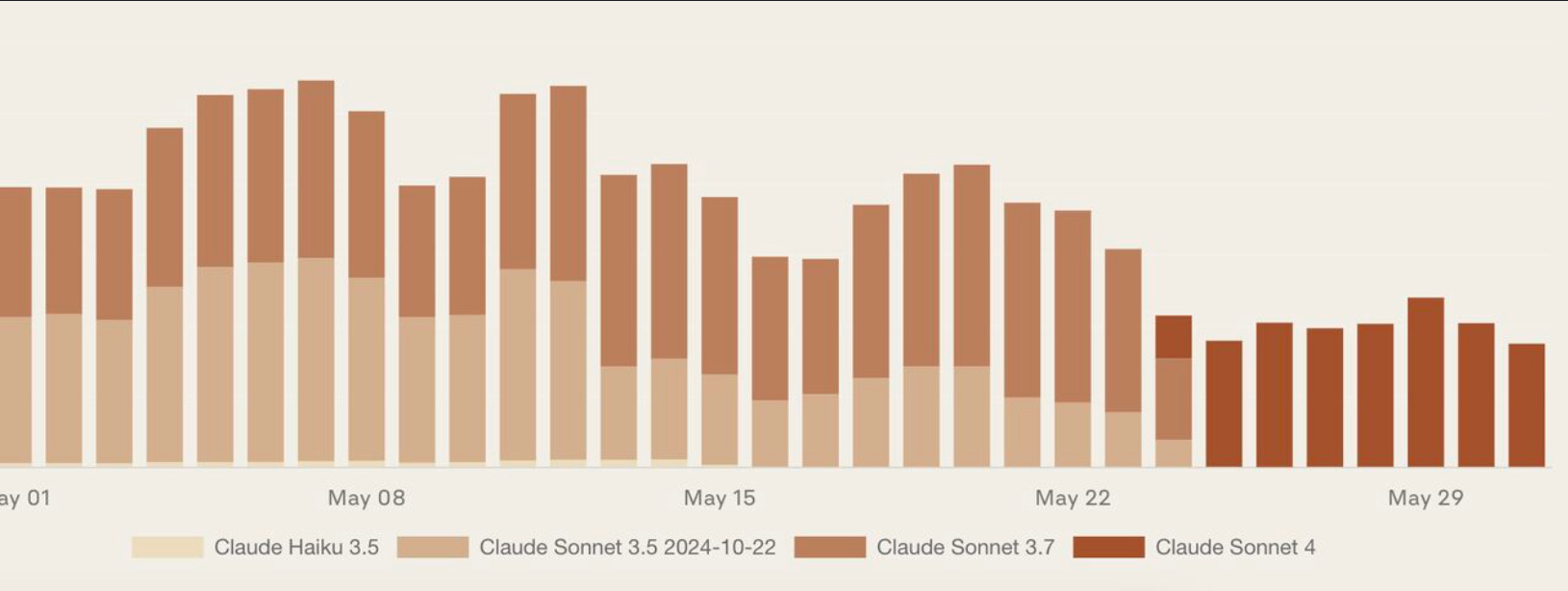
He also chose to withhold charging for the product when the AI made a mistake and broke an app, keeping users happy and incentivizing him to use the AI with the least bugs. In practice, you should be looking at your three biggest operating costs every month and check whether each one was the amount you expected. The fixes that hold the most weight are often a setting or a supplier, not an entirely new cost-savings strategy.
07: what still isn’t clear from the research
Base44’s revenue at the sale. Calcalist’s figure of about $200,000 a month can’t be reconciled with Maor’s own $189,000 profit figure in May 2025.
How the $74.1 million of estimated earnouts relates to the $169.0 million Wix has recorded, and how much has been paid in cash or shares.
The ceiling on the earnout and the revenue targets.
How much of each earnout payment went to Maor and how much to employees.
Whether Maor ever wrote the thread he promised on the failed launches and his first 50 users.
08: the brand today
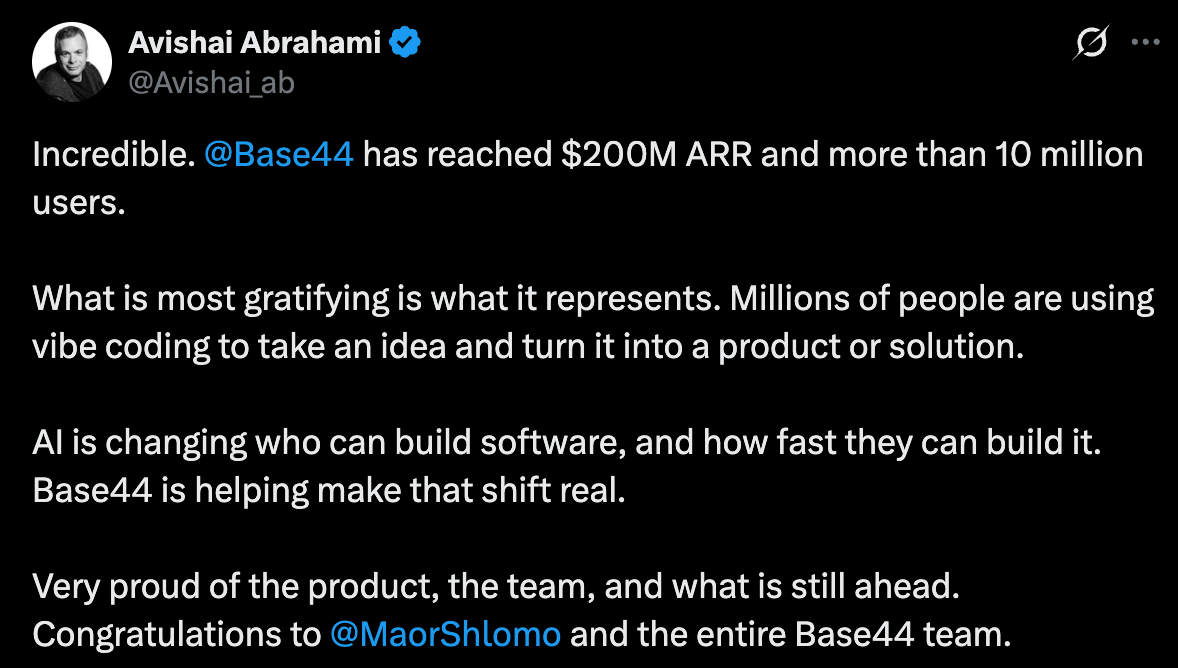
Base44 is still owned by Wix, and ARR has increased from $100 million in March 2026 to $200 million in August 2026, with more than 10 million users.
The brand launched its own language model, Base 1, and Wix expected Base44’s gross margin to rise to about 60% in H2 2026 from close to break-even earlier in the year. That being said, growth has been expensive for the buyer: Wix increased its marketing spend by about 80% to about $200 million in Q1 2026, including a $20 million Super Bowl campaign, and reported a net loss of $76.4 million for Q2 2026. Wix’s stock price hit a low in June 2026 and had doubled by late August though it was still down 18.7% year to date. Base44 has grown faster under Wix than initially expected. In August 2025, it expected $40-$50 million ARR by the end of that year.
FOUNDED FACT
Base44 wasn’t Wix’s first bet on a new way of building. Its own website builder first ran on Adobe Flash. It was released to the public in 2007, had 3.5 million users by April 2010, and was replaced with an HTML5 builder in March 2012.
LEARN MORE
Lenny’s Podcast — “Solo founder, $80M exit, 6 months: The Base44 bootstrapped startup success story,” Lenny Rachitsky with Maor Shlomo, July 2025.

Inc. — Ben Sherry, “How Base44 Found a Buyer 4 Months After Launching,” December 2025. The launch, the nights checking the servers and the meetings with Wix.
Maor Shlomo — thread on X (@MS_BASE44), April 14, 2025. What worked and what didn’t in Base44’s marketing.
LinkedIn post on lessons learned: https://www.linkedin.com/feed/update/urn:li:activity:7304529985455718401/
SOURCES
Wix.com — press release, June 18, 2025. The initial consideration of about $80 million, earnouts through 2029, about $25 million in retention bonuses within it, and the quote from Maor on the fit.
Wix.com — second-quarter 2025 results, August 6, 2025. Base44’s ARR of “just a few million” in June 2025 and the $40 to $50 million forecast for the end of 2025.
Wix.com — fourth-quarter 2025 results, March 4, 2026; first-quarter 2026 results, May 13, 2026; second-quarter 2026 results, August 4, 2026. Acquisition-related expenses of $90.0 million, $37.9 million and $41.1 million, $37.3 million paid for acquisition-related costs in the first half of 2026, $100 million and $150 million ARR, the gross margin outlook, Base1 and the second-quarter net loss.
TechCrunch — Julie Bort, June 18, 2025. 250,000 users at the sale, $189,000 profit in May 2025, eToro, Similarweb, the AWS demo, Explorium and Insight Partners, word of mouth, and the quotes on the moonshot and on scale.
Calcalist (Ctech) — June 18, 2025. Maor as the only shareholder, the earnout tied to revenue targets and the split of users between the US and Israel.
Calcalist (Ctech) — August 24, 2025. Revenue of about $200,000 a month on the eve of the sale, Haifa, his mother’s work, Explorium, stepping down, Thailand and the Philippines, the tattoo website, the 20 community users, Oren Zeev and the funds, the hires and the quotes.
CEO Insider — interview with Maor Shlomo, August 4, 2025. The Scouts, the first 10 users, the Product Hunt launch, influencers and paid ads, the first hire and why he sold.
Inc. — Ben Sherry, December 16, 2025. The February 2025 launch, prices of $20 to $200 a month, running every role, waking every two to three hours, and the May 2025 meetings at Abrahami’s home.
Lenny’s Podcast — July 6, 2025. Not trying to build the biggest thing, the three friends, the $1.5 million car target and AI writing about 90% of his code.
Maor Shlomo — posts on LinkedIn (March 5, 9, 10, 12 and 16; April 18; May 3 and 28; June 3, 4 and 18, 2025) and X (March 6 and March 16, 2025). The years of failed MVPs, the three friends, the nonprofit, the five lessons on building alone, the server upgrades and $5,000 of marketing, 10,000 companies and 1,300 paying customers, the AWS Summit demo, the affiliate program, the $189,000 May profit and its causes, and his post on the sale.
Maor Shlomo — thread on X, April 14, 2025. $0 to $1 million ARR in three weeks, 140,000 users in seven weeks, LinkedIn, smaller creators, churned subscribers and paying users.
Calcalist (Ctech) — March 4, 2026. The $90 million Maor was on track to receive for milestones.
Globes — May 13, 2026. The $38 million payment in the first quarter of 2026 and the $18 million in cash near signing.
Calcalist (Ctech) — May 25, 2026. Wix’s marketing spend and the Super Bowl campaign.
Calcalist (Ctech) — August 4, 2026. The $41 million payment and more than $150 million in total to Maor.
Calcalist (Ctech) — August 20, 2026. Maor’s announcement of $200 million ARR in August 2026.
Avishai Abrahami — post on X, August 20, 2026. $200 million ARR and more than 10 million users.
Calcalist (Ctech) — August 23, 2026. Wix’s share price low in June 2026, its recovery and the change for the year.
Wix.com — Form 20-F for 2025, filed March 2026. The description of vibe-coding, and the Base44 purchase price: $92.2 million, made up of $18.1 million in cash and $74.1 million of contingent consideration, plus $43.0 million of bonuses and other payments and $8.0 million of equity awards outside it.
Base44 — pricing page, base44.com, read October 2026. The free plan and the 20% discount for annual billing.
Wikipedia — Wix.com. The Flash beta, the 2010 user count and the HTML5 builder.
Founded — Issue 4, Baremetrics. Josh Pigford on management and profitability.
Every figure in this issue is drawn from public statements, interviews, press coverage and Wix’s disclosures, and each one is listed with its source above. No interview was conducted with the founder. Base44 was a private company and published no financial statements; figures after the sale come from Wix’s results and Maor’s own posts as reported in the press. The figures have not been independently audited.